
English| EUR
Suggested for you
More currencies
Choose a language
Kauai and Maui each deliver distinct underwater experiences shaped by geography, trade winds, and reef ecosystems. Kauai's sheltered south shore offers year-round shore diving access, while Maui's volcanic crater formations create dramatic wall dives and channels. This guide breaks down water clarity, marine encounters, and seasonal patterns to help you match conditions to your experience level.
Quick answer
Kauai excels in accessible shore diving with calmer summer conditions and pristine south shore reefs like Koloa Landing, while Maui offers more advanced boat dives with dramatic topography and larger pelagic species around Molokini Crater. Kauai's visibility averages 60-80 feet in summer months with gentler currents, making it ideal for newer divers, whereas Maui's winter swells and stronger channels suit intermediate to advanced certifications. Both islands close certain sites seasonally due to surf.
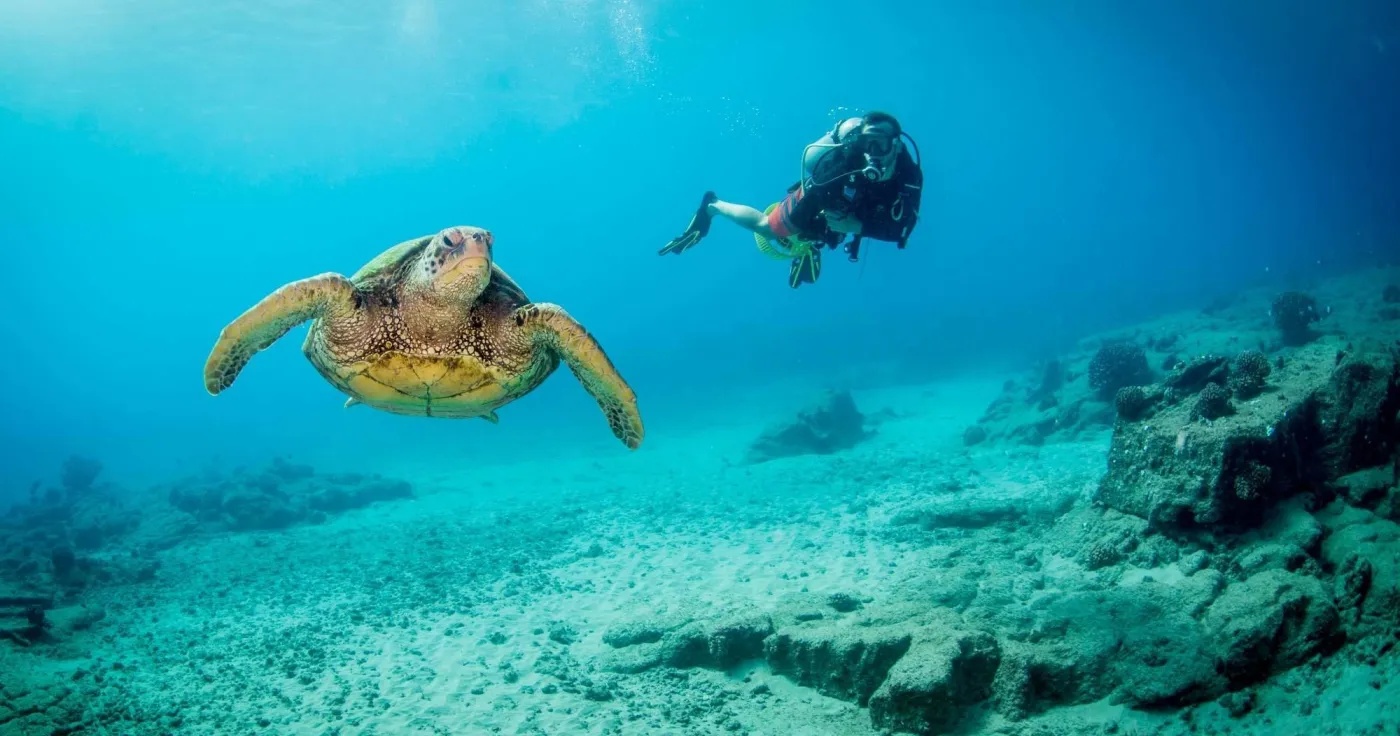
Kauai's south shore functions as a natural diving classroom from May through September, when Poipu's reefs settle into glass-calm morning windows and visibility stretches past 80 feet. Koloa Landing serves as the island's busiest entry point, a former steamship pier now submerged in 15 to 60 feet of water where green sea turtles graze on algae-covered lava ledges. Shore access eliminates boat logistics, and the gradual depth profile lets divers fine-tune buoyancy without battling surge. Winter flips the script: north swells wrap around the island's edges, muddying southern bays and pushing activity to protected coves that require local knowledge to locate. Maui counters with vertical drama. Molokini Crater's submerged caldera wall drops 150 feet into open ocean, attracting manta rays, reef sharks, and seasonal whale songs that reverberate through the water column. The crater's back wall faces stronger currents and colder upwellings, conditions that concentrate fish biomass but demand confident buoyancy control. Most Maui diving departs by boat from Maalaea or Lahaina, adding transit time and higher costs compared to Kauai's walk-in sites. Maui's leeward coast remains diveable year-round, though winter visibility dips to 40-60 feet as plankton blooms thicken. Water temperature separates the islands minimally—both hover between 75°F in winter and 80°F in summer—but current strength and bottom composition diverge. Kauai's reef flats spread wide and shallow, built from ancient fringing coral that survived millennia of wave pounding. Maui's younger volcanic slopes create steeper profiles with lava tubes and arches that frame blue-water backdrops. Choosing between diving Kauai versus Maui hinges on access preference and comfort with exposure: Kauai rewards self-sufficient divers who value shore convenience and beginner-friendly terrain, while Maui suits those chasing bigger animals and willing to commit to boat schedules. Both islands enforce the same 60-foot sport diving limit without advanced certification, and both require early starts to capture optimal visibility before trade winds stir afternoon chop. Kauai's compact geography concentrates southern dive sites within a 10-mile stretch, whereas Maui's offerings scatter across three distinct coastlines, requiring longer drives between locations.
“Kauai's reef flats spread wide and shallow, built from ancient fringing coral that survived millennia of wave pounding.”
The best window for diving Kauai is during the late spring and early autumn months, specifically when north shore swells subside and water clarity improves. Across both Kauai and Maui, prioritizing the morning hours remains the most effective strategy for securing favorable underwater conditions.
Dryer, 78–82°F
Calmer seas allow access to more northern dive sites with higher visibility.
Mild, 75–80°F
A transition period offering stable water conditions before winter swells arrive.
—
The best arrival window is 07:00–10:00 to ensure calmer water and better visibility before afternoon winds intensify.
Verdict: The optimal time for diving is between May and October, specifically targeting the best arrival window of 07:00–10:00 to maximize visibility.
Shore diving access at locations like Koloa Landing is available daily throughout the week. The coastline remains accessible at all hours to facilitate diving logistics.
Diving costs in Hawaii are determined primarily by whether you choose shore-based access or boat-chartered excursions. While boat dives involve standard charter fees, shore diving relies on public access points.
Verdict: Most divers pay 0 USD for site access, with total costs fluctuating based on equipment rental or professional guide services.
Shore diving at Kauai sites like Koloa Landing requires certification, specialized gear, and careful timing for safe entry.
Everything you need to know about scuba diving kauai vs maui
Choosing between scuba diving Kauai vs Maui often depends on your preference for rugged landscapes versus established tourism infrastructure. While both islands offer excellent underwater experiences, Kauai is known for dramatic lava tubes and sea caves, whereas Maui is famous for the Molokini Crater and high populations of green sea turtles. Researching your specific interests in underwater topography will help you decide between a Kauai diving trip or a Maui excursion. Both islands provide plenty of opportunities for novice divers to obtain certifications through local operators. Marine life encounters differ slightly, as Hawaii scuba diving sites across all islands feature vibrant coral reefs and endemic species. Maui often provides easier boat access to high-density turtle habitats, while Kauai diving tours frequently explore volcanic formations that house unique reef sharks and pelagic fish. Regardless of your choice, underwater visibility remains a key factor for any scuba diving Kauai vs Maui itinerary. You should plan your dives for the morning to ensure optimal conditions before the winds pick up. Local operators on both islands monitor weather patterns daily to provide the safest underwater experience. Public beach access is generally free, though specialized equipment rentals or boat charters will involve additional costs. For shore diving specifically in Kauai, Koloa Landing is a popular spot that offers free entry to the water. Divers should prioritize morning sessions to take advantage of the calmer water conditions and improved visibility. While official entry to public beaches is 0 USD, always budget for professional guide services and rental gear if you are not traveling with your own equipment. Comparing scuba diving Kauai vs Maui prices reveals that costs are generally comparable across the archipelago, depending on whether you choose guided shore dives or multi-tank boat trips. Shore diving remains a highly accessible way to explore the coastline without the logistical overhead of a boat. Koloa Landing serves as an ideal base for shore diving in Kauai due to its protected environment and ease of entry. Ensure you arrive between 07:00 and 10:00 to maximize your time in the water and avoid afternoon chop.
Scuba Diving in Poipu
Read more GuideBest Scuba Diving Sites in Kauai
Read more GuideIs Scuba Diving in Kauai Dangerous?
Read more Tickets & toursPADI Scuba Certification in Kauai
Read more Tickets & toursNorth Shore Scuba Diving
Read more GuideDiving Tunnels Beach
Read more Tickets & toursKauai Discover Scuba Diving for Beginners
Read more